
In the first three quarters of 2026, my country's exports increased by 16.4% year-on-year. The export scale in the third quarter exceeded 8 trillion yuan for the first time, with a single-quarter growth rate of 22%. Mechanical and electrical, new energy, and computing power-related products have become the main force in this round of export growth.
Facing the complex and ever-changing overseas market, what is the support of this set of eye-catching data? How has the overseas expansion model of Chinese companies changed? How can the macroeconomic "troika" run in a more balanced manner?

On September 15, 2026, a batch of new energy vehicles were waiting for shipment for export at Yantai Port, Shandong Port (drone photo). Published by Xinhua News Agency (Photo by Tang Ke)
■ Structure moves towards “new”
"Since 2023, the outside world has been worried that the contribution of China's exports will decline in the context of the restructuring of the global industrial chain. However, the fact is that from 2023 to 2025, even in the face of external shocks such as tariff wars, China's exports have still maintained rapid growth." Why can it maintain high growth? Zhan Yubo, deputy director of the Institute of Economics of the Shanghai Academy of Social Sciences, analyzed that this reflects changes in the industrial structure - emerging industries have played an important supporting role in fixed asset investment, industrial added value and exports.
Experts pointed out that my country's export structure has made key adjustments: from relatively labor-intensive goods in the past to technology-intensive goods. This transformation ensures the product's strong competitiveness in the global market. At the same time, the export market structure is also changing simultaneously. From being dominated by the United States and Europe for a long time in the past, it has shifted more to the "Belt and Road" co-building countries, ASEAN, the Middle East and Latin American markets, effectively diversifying single market risks.
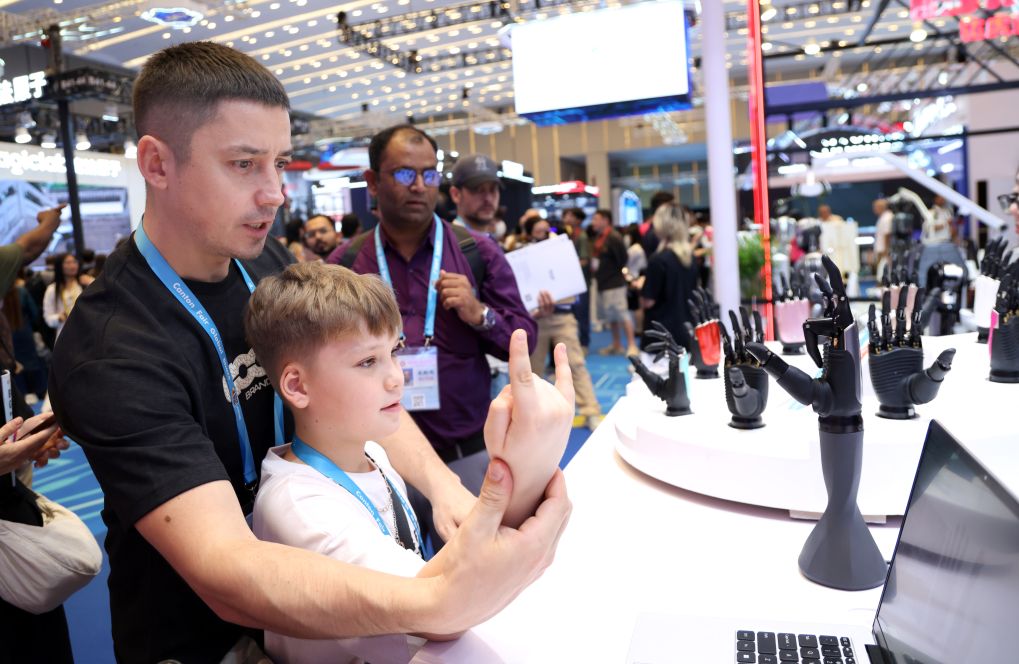
On April 15, 2026, overseas buyers took their children to interact with dexterous hands at the 139th Canton Fair. Photo by Xinhua News Agency reporter Lu Hanxin
■ Diversified layout, from price competition to exporting “brand + service”
Faced with demand fluctuations in overseas markets, companies have the most acute sense of reality. Ruan Qingsong, a professor at the School of Economics and Management of Tongji University, observed that the most obvious adjustments currently being made by export companies are focused on two lines: high value-added products and further diversification of market layout.
Data supports this trend: in the first three quarters, exports of mechanical and electrical products grew by 23.7%, much higher than the overall growth rate. Ruan Qingsong believes that in the future, we must not only further improve the technical content of products, but also focus on exporting complete sets of equipment and supporting services overseas. Through overall services such as localized warehouse building and localized operations, we further strengthen our comprehensive competitiveness. In addition, he particularly emphasized an often overlooked dimension - branding. "Sometimes with the same technological content, we are no worse than European and American products, but the price is lower. The reason is that the international market's recognition of our high-end brand needs to be improved." Ruan Qingsong pointed out that this is not only a technical issue, but also a business operation issue, and we must rely on international brand strategies to enhance brand value.
Regarding next year's export situation, Ruan Qingsong reminded that we should not be blindly optimistic just because of this year's high growth, but must take precautions to deal with potential pressure from demand fluctuations.
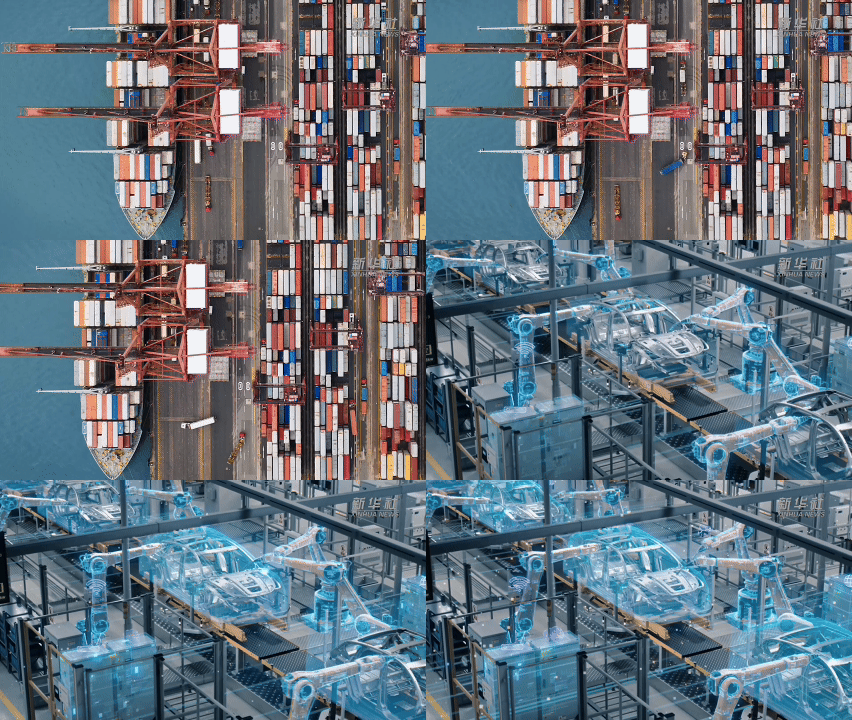
■ Balanced efforts to boost private investment are key
Looking at the "troika" of consumption, investment, and exports together, the current balance of economic growth still faces challenges. Nguyen Thanh Song bluntly said that export data is impressive, domestic consumption is moderate and stable, and investment appears to be declining at first glance. He believes that what should be most concerned about now is the decline in private investment. "The private economy is the most sensitive to market conditions. If the decline in private investment can narrow or even rebound, it will be a very good signal." To achieve this, the core thing is still to restore corporate confidence and actual orders. As long as orders and profits improve, other problems will be easily solved.
Regarding the future policy focus, Zhan Yubo believes that the focus is to ensure the sustainability of economic growth. "This needs to be achieved through technological progress, especially breakthroughs in key 'stuck-neck' technologies. At the same time, the growth effects brought about by technological progress must be radiated to all parts of society." He suggested that policies need to be more balanced: ensuring balanced growth in residents' income, alleviating worries about medical care and elderly care, and promoting more people's livelihood projects. "Overall, this is a systematic effort."
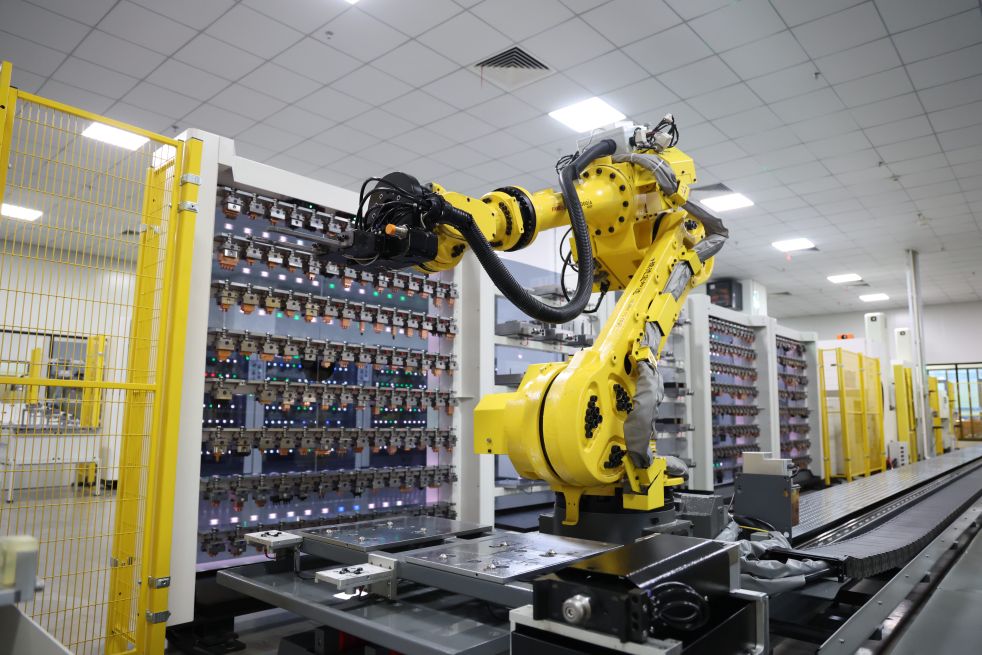
On July 2, 2026, industrial robots were at work in the digital workshop of the Modebao smart factory in Dongguan City, Guangdong Province. Photo by Xinhua News Agency reporter Liang Xu
From fighting for price to fighting for technical content and fighting for brand value; from betting on a single market to weaving a dense global map - behind the export growth rate is a "new" track that is getting wider and wider. When confidence is transmitted to tens of millions of companies along the lines of orders, cash flow and profits, the big ship of the Chinese economy will be able to move steadily and far in the structural shift.
Coordinator: Yao Yujie Wang Qiwen
Director: Li Haiwei Wang Zhuai
Author: Ding Ting Xiao Jintao
Studio: Jin Shanmei, Qin Yanxi, Liu Ye, Zhang Yuli, Wang Tianhao, Guan Yujia
Photographed by: Xinhua News Agency Shanghai Branch Shendu Decoding Studio
Produced by Xinhua News Agency Audio and Video Department