CCTV news: Recently, transformer manufacturers in many places in China have been operating at full capacity, and overseas orders continue to be full. Some companies have already scheduled their production tasks until 2027. Why have transformers, once "obscure" power equipment, become a hot commodity in short supply in the global market? Let’s take a look at the reporter’s report.
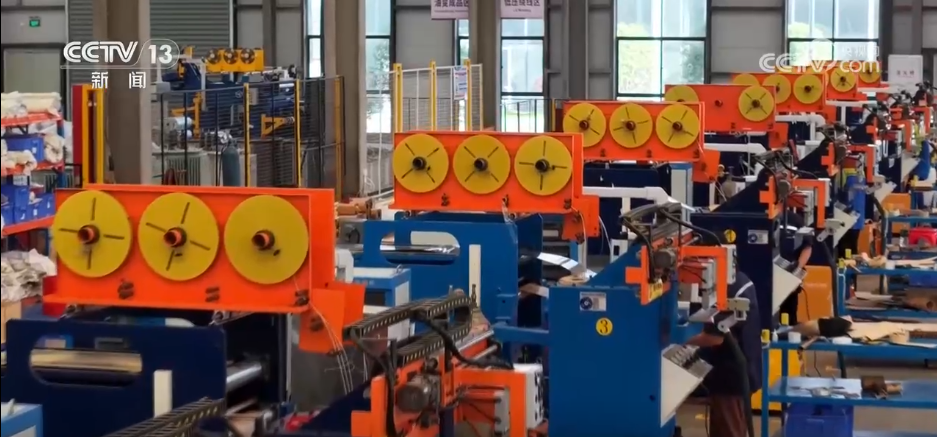
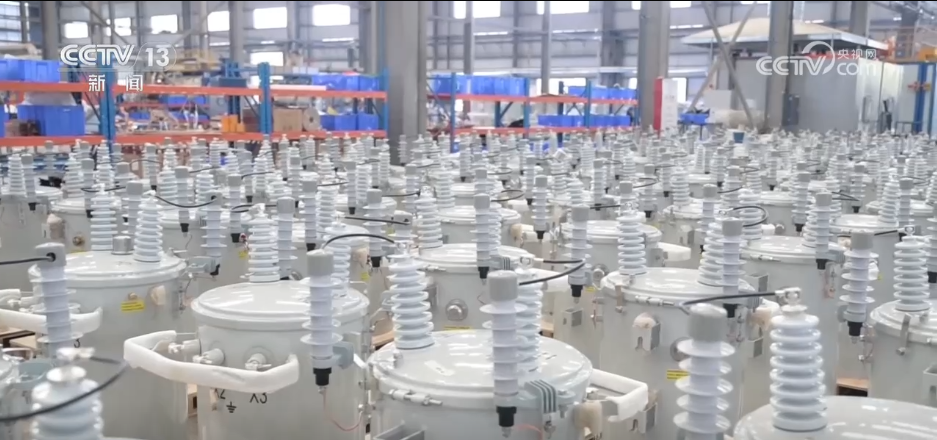
In the workshop of a transformer manufacturer in Nanchang, Jiangxi, machines roared and workers rushed to make overseas orders. In 2026, this company's orders on hand will be close to 700 million yuan, of which exports will exceed 600 million yuan, accounting for more than 90%. The person in charge of the company said that with the explosive growth in overseas increments, the company will continue to expand the coverage of overseas markets, vigorously promote the research and industrialization of high-voltage products above 500 (kilovolts), and occupy the high-end market with technological leadership. In the production workshop of a technology company in Ganzhou, Jiangxi, transformer cores are neatly arranged and automated equipment is running at high speed. The company's main business is transformers and high and low voltage complete sets of equipment, and its products are exported to Africa, America and other places. To keep up with the growth in orders, they are expanding. Outside the factory of an electrical company in Pingdingshan, Henan, transformers ready to be shipped are neatly arranged; in the 5G digital and intelligent workshop, production of precision components is being stepped up. Since this year, an average of more than 30 transformers have been shipped from here to Russia, Vietnam, Mexico and other markets every day.
Why is there a sudden surge in global orders for transformers and other power equipment? The answer lies in the huge demand for electricity generated by the development of artificial intelligence. Data shows that the power load of a very large-scale AI data center has exceeded 1 gigawatt (1GW), which is equivalent to the peak power load of a medium-sized city in summer. In addition, large AI models are accelerating from the "training" stage to the "inference" stage, which means that their power consumption shifts from one-time investment to continuous consumption. Ding Zhaohao, a professor at the School of Electrical and Electronic Engineering at North China Electric Power University, said that as large models become more and more easy to use, the energy consumption of inference will become more and more significant and the proportion will become larger and larger. AI data centers will naturally have higher and higher power requirements.
AI drives power demand and "computing and electricity collaboration" presses the accelerator button
Global demand for power equipment is growing rapidly with the outbreak of AI. So, why is this wave of surge in overseas orders concentrated in China? This year's government work report proposed "computing and electricity collaboration" for the first time. How will the "accelerator button" be pressed for this "two-way rush" between AI and electricity? Come and see the report.
Data show that there are about 3,000 enterprises in the transformer industry in my country. In 2025, the total export value of transformers will reach 64.6 billion yuan, an increase of nearly 36% from 2024. my country has become the world's largest transformer producer and has obvious advantages in raw materials, cost, production cycle and other aspects. According to Cai Yiqing, secretary-general of the Electric Power Equipment Branch of the China Electricity Council, my country has become the world's largest transformer producer and has built the world's most complete transformer production system. It has independent and controllable hard power across the entire industry chain, and its production capacity accounts for about 60% of the world's.
This system advantage is laying the most solid foundation for the development of China's AI. Professor Ding Zhaohao said that the recent use of large models in China has surpassed that of the United States, which is actually closely related to some of the models recently released by the country, including innovations in computing power and technology and business models. Because the current API (computing service call interface) pricing is very advantageous compared to the American model, the price/performance ratio is very good in some scenarios. In the future, only when these innovations are combined with the advantages of electricity can the advantages of energy and electricity be truly transformed into more concrete and tangible advantages for the AI industry. In particular, clean electricity will support the sustainable and green development of China's artificial intelligence industry.
This year’s government work report proposed for the first time “creating a new form of intelligent economy” and included “implementation of new infrastructure projects such as ultra-large-scale intelligent computing clusters and computing and electricity collaboration” into the top-level design. This means that computing and electricity collaboration has been upgraded from a technical concept to a national strategy, and the "two-way rush" of AI and electricity has officially pressed the "accelerator button." Wu Liqiang, assistant director of the Statistics and Digital Intelligence Department of the China Electricity Council, said that through the integration of "source, grid, load and storage", computing and power collaboration can directly utilize green power in the west and reduce electricity costs. Computing and electricity synergy can transform the "wind and light" of the west into the "computing and intelligence" of the east, forming a closed loop of "numbering in the east and calculating in the west", which is the key to my country's cost control in the AI era.