Every time American tourist Peter Anthony comes to Shanghai, he brings a stack of prescription prescriptions from family and friends.This is a habit he picked up after visiting an optical shop in Shanghai for the first time many years ago.
As in the past, Anthony’s first stop after arriving in Shanghai in June this year was not the Bund or Nanjing Road, but an optical shop.
“I wear glasses for my children, my friends, and of course myself.” Anthony said that compared to the United States, glasses in China are not only more affordable, but also fast and provide meticulous service.In some optical stores, ordinary glasses can be picked up in as little as an hour, and customized lenses can be completed within a few days, which is very suitable for foreign tourists visiting China for a short period of time.
New Zealand tourist Malcolm also included "customized glasses" in his "China travel" schedule.Malcolm, who has astigmatism in both eyes, said he was impressed by the advanced equipment at the Shanghai International Optical City store to accurately measure his pupils and adjust his glasses according to his needs for reading and driving.
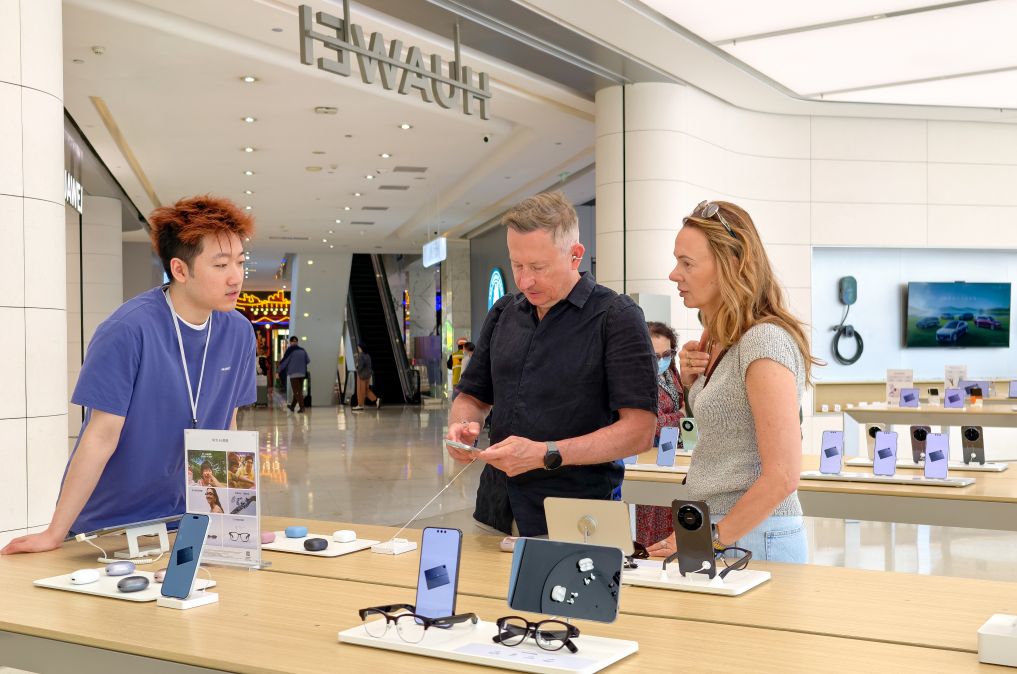
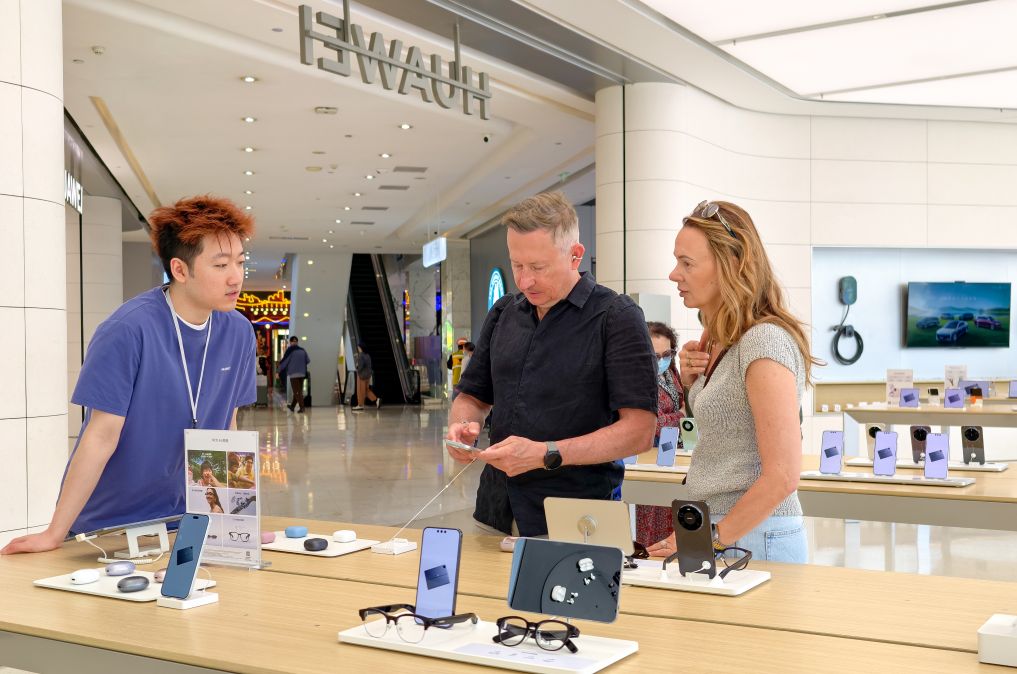
On April 30, foreign tourists purchased products in a Huawei flagship store in Beijing.Photo by Xinhua News Agency reporter Ju Huanzong
In recent years, from glasses to haircuts, from customized clothing to traditional Chinese medicine therapy and oral care, more and more foreign tourists come to China not only to buy "Made in China" products, but also to experience China's professional, efficient, meticulous and convenient services in their itineraries.
A new change extending from commodity consumption to service consumption is quietly emerging in China's inbound tourism market.
“For overseas consumers, China’s quality, China’s speed and China’s cost-effectiveness create an experience that exceeds their expectations.” said Yi Jiawei, owner of an optical shop in Shanghai.
In addition to customized glasses, more and more overseas tourists are seeking professional, efficient and personalized experiences in other service areas such as hairdressing, dental care, traditional Chinese medicine and customized clothing.
Bianca, an Australian traveling to Shanghai, said that the clothes made by Chinese tailors fit almost perfectly."You can go there on the first day, and the tailor will quickly get the measurements, and it can be done in a few days. It's incredible!"
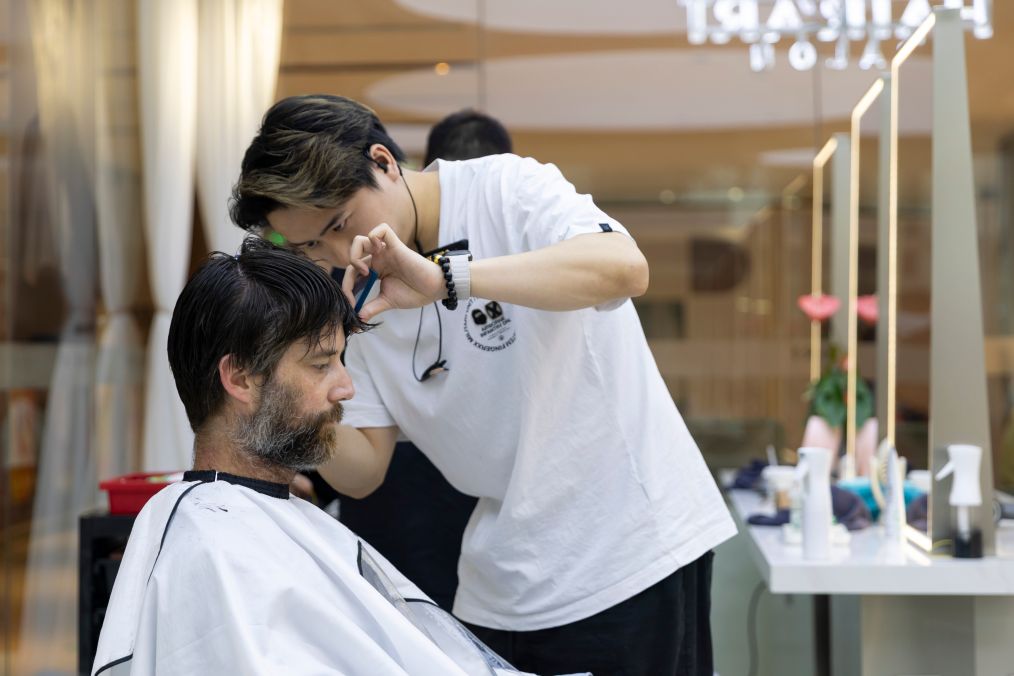
On June 13, a foreign tourist got a haircut at a barber shop in Shanghai.Photo by Xinhua News Agency reporter Wang Xiang
The high-quality, customized experience also extends to hair salons.Stefan, a German tourist who just got a haircut in Shanghai, praised the hairstylist for giving him a satisfactory hairstyle and expressed his intention to keep this hairstyle for a long time.
The traditional Chinese medicine physiotherapy services with unique oriental charm also open a door for foreign tourists to explore traditional Chinese health and wellness culture.
In the Qinghefang historical and cultural district of Hangzhou, Zhejiang, the fragrance of traditional Chinese medicine lingers in the century-old Fanghuichuntang Hefang Street Store.The reporter learned that the number of foreign tourists received here has shown a steady upward trend in recent years, and the tourists mainly come from Southeast Asia and Europe.
“We found that foreign tourists have a deep interest in traditional Chinese medicine culture, especially in acupuncture, massage, bone-setting and other traditional Chinese medical treatments, and they value the oriental cultural experience behind them.” said Hu Jialiang, director of the Fang Huichun Tang Hefang Street Museum Office.
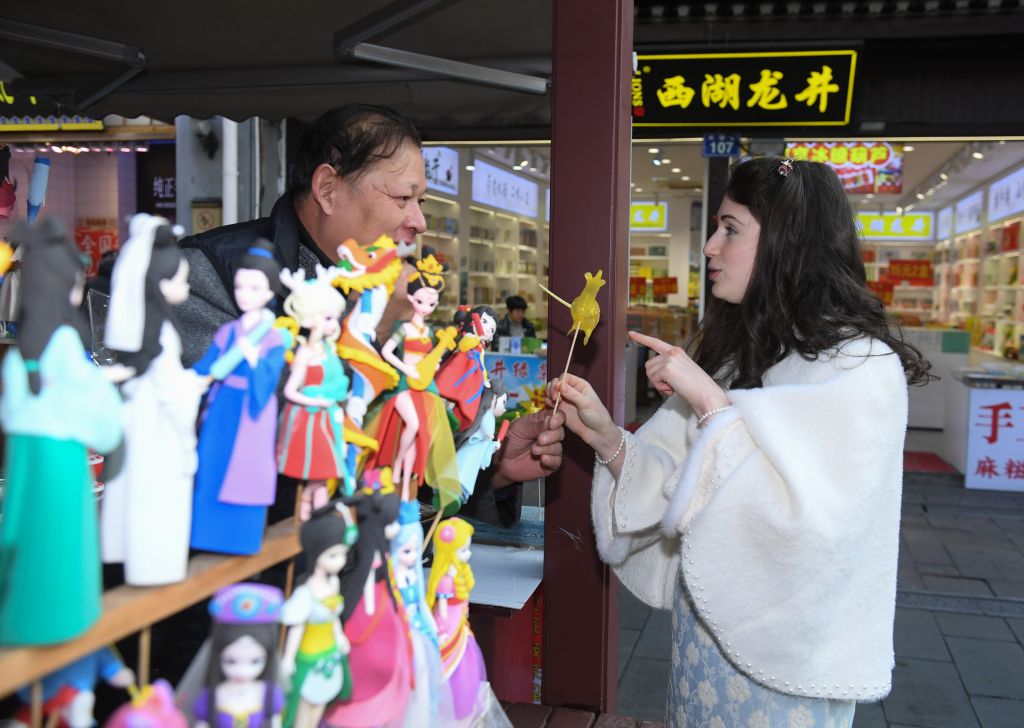
Foreign tourists communicate with sugar sculpture artists in Qinghefang, Hangzhou (photo taken on January 15, 2024).Photo by Xinhua News Agency reporter Weng Xinyang
In recent years, as the visa-free policy continues to expand, international flights continue to resume, and facilitation measures such as payment and communication continue to improve, "China Travel" continues to heat up, and more and more foreign tourists have begun to experience China in depth.
As of June this year, China has implemented unilateral visa exemption for 50 countries around the world, and comprehensive mutual visa exemption with 29 countries. The applicable countries of the 240-hour transit visa exemption policy have been expanded to 55 countries, and the applicable ports of entry have increased to 65.
In March this year, China introduced a number of measures to further promote inbound tourism consumption and tourism service exports, including optimizing departure tax refund services, launching multi-language versions of life service applications, and further facilitating visa processing, etc., to continuously improve the consumption experience of foreign tourists in China.
Growing demand also drives the service industry to accelerate upgrading.Many shops and clinics have launched bilingual service menus, equipped with translation tools, and support overseas bank card payments. More and more employees are taking the initiative to learn basic English to communicate smoothly with foreign customers.
The reporter saw in Hangzhou that in order to better receive international guests, Fang Huichuntang Hefang Street Store has set up an all-English introduction guide board at the entrance. Each core point in the store has a bilingual audio guide in Chinese and English that can be listened to by scanning the QR code. The consumption points support global payment channels.
“The biggest challenge for traditional Chinese medicine to go global is the transformation of cultural context. Communication is very important.” Hu Jialiang said, “There was once a Colombian guest. The doctor diagnosed him with ‘liver fire’ after taking his pulse. In order to avoid misunderstandings caused by literally translating ‘liver fire’ as ‘liver on fire’, the staff used translation tools to explain Chinese medicine to the guest in more depth.The ‘yin and yang balance’ theory of medicine.”
Cao Yixia, a researcher at the Institute of Applied Economics of the Shanghai Academy of Social Sciences, believes that foreign tourists are increasingly keen to incorporate daily services into their travels. This trend will further improve service standards, customer experience and digitalization in related fields, while opening up new growth opportunities in the fields of health care, wellness and culture.
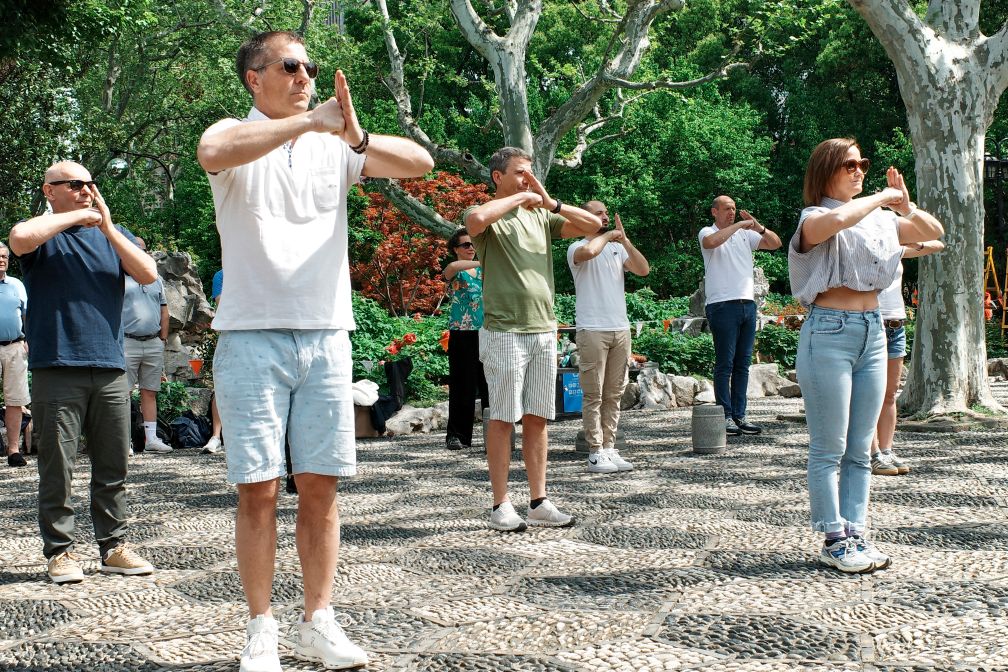
On April 15, foreign tourists experienced Tai Chi in Shanghai Fuxing Park.Published by Xinhua News Agency (photo by Liu Lichao)
Drinking hot water, moxibustion, wearing long johns... Since last year, there has been a rise in content on platforms such as Xiaohongshu that foreigners pay attention to China's daily health regimen. More and more foreign tourists are sharing their personal experiences on social media, and "becoming Chinese" has become a hot word on the Internet.These real and tangible "Chinese daily life" are entering the daily lives of consumers around the world.
“This is a continuation of media ecology and life-oriented communication, and is also a direct effect of the continued deepening of China’s transit visa exemption and other policies.” said Sun Jiashan, a researcher at the Chinese Culture Teaching and Research Department of the Central Academy of Socialism.
The recently released "Fifteenth Five-Year Plan for Building a Tourism Power" proposes that by 2030, the international influence of China's tourism will be significantly enhanced, and the scale and efficiency of inbound tourism will continue to expand, with the number of inbound tourists reaching 190 million and the total expenditure exceeding US$150 billion.
“The upsurge in experiential services not only brings economic benefits to China, but also establishes a more sincere, friendly and natural emotional bond between China and the world through daily, face-to-face people-to-people contact.” Cao Yixia said.
In 2025, China’s inbound tourist arrivals will exceed 150 million, a year-on-year increase of over 17%; inbound tourism expenditure will exceed US$130 billion, a year-on-year increase of nearly 40%.The World Travel and Tourism Council predicts that China is expected to become the world's largest tourism economy by 2030.(Reporters: Huang Anqi, Ding Ting, Zheng Keyi)